

Why You Ought to be Drinking Bordeaux
Yes, I know the cool kids have long stopped drinking reds from Bordeaux. That’s not actually true. The cool kids NEVER drank Bordeaux. After all, it’s bad enough that their parents and grandparents and great-grandparents did. And with the exception of those probably long-gone greats and grands, their parents still do.
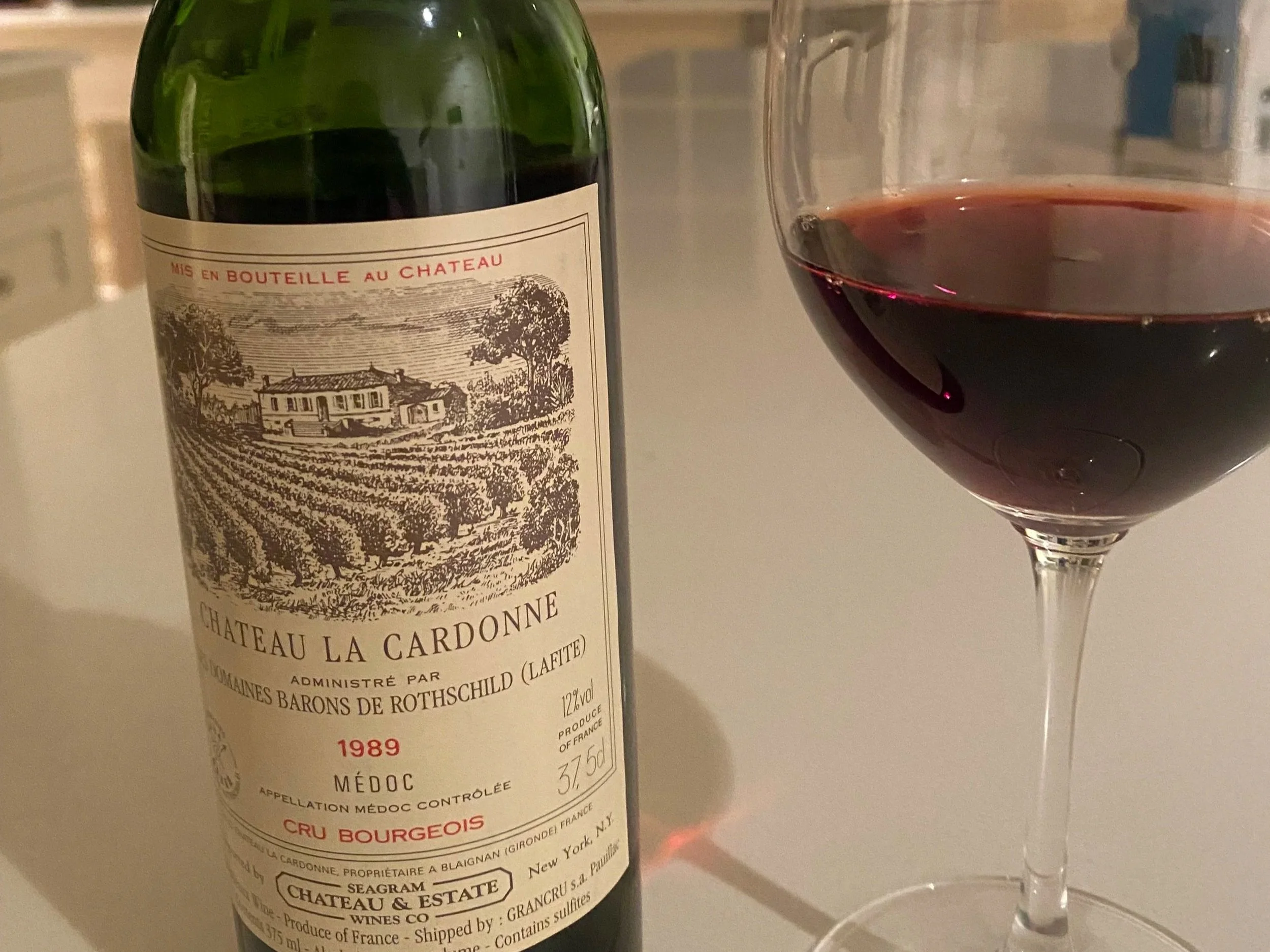
More likely the more significant barrier to getting to know Bordeaux is its perceived high cost, and it’s certainly true that you can have the dubious privilege of spending $500+ on a bottle of a First Growth (because this post isn’t about the hyper-rigid Bordeaux classification system, I’ll leave it at as suggested by the category name, that wine would be considered among the best made year in and year out, which on its face is silly, but that’s a subject for another day). It’s just as true that you can spend $25-$35 a bottle and still get a real sense of what Bordeaux is all about.
The other major impediment is the way Bordeaux has been consumed throughout its long history until relatively recently. Until the last 25 years or so, it was always assumed that there was no point in opening a bottle from that case or cases that your parents or grandparents just bought because it would be too austere—a polite way of saying undrinkable—to enjoy or to show its true colors.
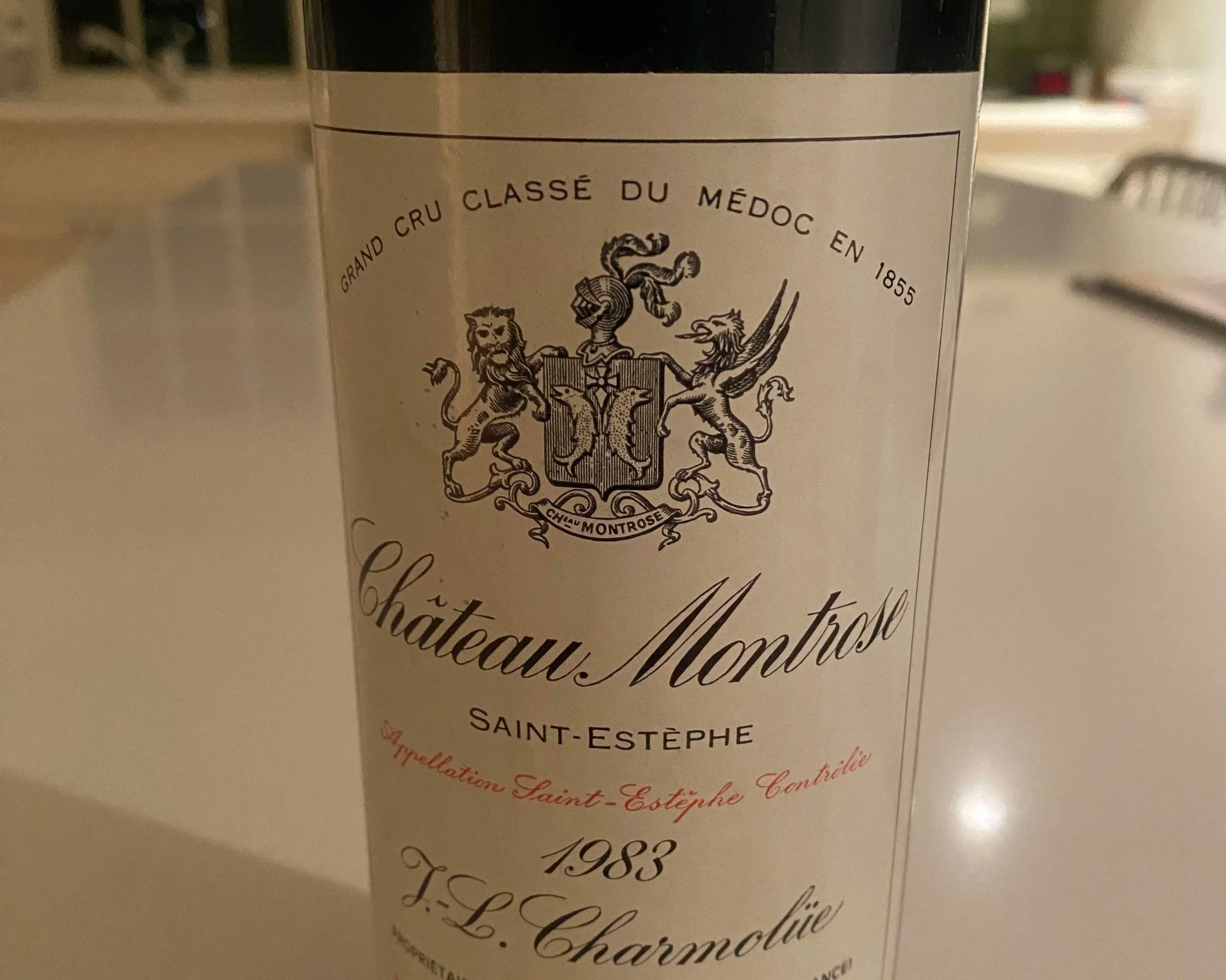
And that probably wasn’t literally true, at least it hasn’t been since the early or mid-1980s, but old habits are hard to move on from. The primary reason Bordeaux was so unfriendly in its youth is because Bordeaux has always been a cool and damp place to grow grapes. That has been changing over the last few decades despite what climate deniers want to believe. It’s simply a function of grape ripening. Or back then, the lack of grape ripening.
While there are certainly other factors in play, warmer growing seasons mean physiologically riper grapes which in turn mean more grape sugars. More grape sugar, more food for hungry yeast to feast on during fermentation. The result is higher alcohol and generally plusher, more approachable wines when young. Again, there’s more to it. Winemaking choices and oak regimen to name just a few, but anyone who denies that there is a direct correlation between warmer weather and riper, more approachable wines isn’t a serious person to be taken seriously.
OK, that was a long digression. Back to the paragraph before last. Because your grandparents’ Bordeaux was virtually undrinkable upon release, those cases were left to mature, often for decades, before they were finally enjoyed. That’s a lot of inventory just sitting on the floor that’s already been paid for. I can’t imagine a world now where a 20-something would be willing to stare at boxes of wine for years before popping bottles open.
While you can still find just-released Bordeaux (many other examples exist in other parts of the world) that is, let’s say, a bit recalcitrant when young, the good news is even that diffidence won’t be nearly as diffident as it was back in the day. I’d argue that even back then, a bottle should always have been opened young because it gives you an important data point going forward.
Now, let’s get to why you should be drinking Bordeaux.
It is the reference red for just about any cab-based wine from anywhere (yes, I know that all Bordeaux isn’t cab heavy; we’ll get to that). The reason California became such a player in the wine game is because in the ‘60s, ‘70s and ‘80s winemakers wanted to emulate their brethren from across the pond. And the same can be said for South America, particularly Chile, which has always looked to France for winemaking inspiration, and Australia. In fact, there would be no Super Tuscans but for Bordeaux.
If you’ve made it this far, and you’re, for example, only a Pinot Noir drinker, thanks for sticking with me! These two styles of wine have nothing to do with each other, and it’s not likely that you’ll love Bordeaux if you’re truly enamored of Pinot. But who knows?
Bordeaux is huge. There are about 630 million of bottles of red Bordeaux made in a typical year. If those tall Bordeaux bottles were stacked up, they would stretch for about 120,000 miles! How’s this for perspective: the Earth’s circumference is about 25,000 miles. That is mind boggling. There are a dizzying number of appellations on either side of the two most important rivers, the Gironde and the Garonne.
For the most part, the wines on the western banks are cab based; those on the eastern side are merlot or cab franc heavy. All Bordeaux is blended. Those on the western side (Left Bank as it is commonly referred to) include merlot and cab franc and sometimes petite verdot and malbec (“cot” in local parlance) but these last two aren’t nearly as important as they used to be. On the facing bank (Right) merlot dominates essentially the way cabernet sauvignon does on the Left and there is more cab franc in the blend than is typically found on the Left.
So, you have lots of choices from $5 a bottle—yes, it’s true—to thousands a bottle. A range for all consumers. If you’re willing to give Bordeaux a try, your timing is fortuitous because the recently released 2023 vintage in now trickling into market.
While I don’t love broad vintage ratings and assessments, there is usually a good bit more truth to them them falsehood. The consensus seems to be that 2023 won’t compete for vintage of the century honors, nor will it be thought of as a disappointment. Vintage charts were more relevant in the old days (your grand and great-grand’s time) because as indicated above, it’s simply warmer now so fewer vintages anywhere in the world really are disasters any longer, putting aside weather catastrophes, like floods, and fires.
Rather than point you toward the $20 and under crowd, and in Bordeaux there are many to choose from in the satellite appellations, let’s focus on Bordeaux’s more hallowed place names: the Left Bank’s primary named communes of (from north to south) St.-Estèphe, Pauillac, St.-Julian, Margaux and what used to be called Graves. Same can be said for a few on the Right Bank: Pomerol and St.-Emilion (though its harder to find examples in the price range I referred to at the start of this post on the Right Bank).
Rather than curate a list for you because of the vagaries of distribution in different markets, what I will tell you is that for around $35, maybe a bit more as well as less, you will be able to ask your retailer to give you a few recommendations from each of these. I’ve done the research so I know they are out there. In fact, I found one from St.-Estèphe that clocks in at about $21!
What is great about giving Bordeaux a chance in this way is that by sticking to these place names, at least at first, you won’t end up with a sort of least-common-denominator Bordeaux. Not that there’s anything wrong with that. But I would wager that if you eventually tried one from each place, you will smell and taste the differences between them, even in the face of their similarities. And that is really the point. If you’re spending $25, $35 or $40 on a bottle, the wine ought to taste like where it comes from rather than a generic—even if pleasant.