

What an Ordinary Bottle of Wine Taught Me About Tasting
An Unexpected Discovery in Reykjavík
While wandering through the always-bustling Pósthús Food Hall in the old part of Reykjavík, I somehow managed to be inspired to do a dive into Bolla’s Verona IGT which I came across at the Italian stall. You’d be well within rights to ask, what was I thinking? I’m actually not sure that I was at that point given that I had just completed four hours of driving coupled with a two-and-a-half hour ferry to get from the West Fjords, where we had been the last week, to this lovely, low-rise capital city for three nights before flying home to New York City.
After navigating at least 50 kilometers of “highways” in repave mode, my back and brain were rattled. I have to hand it to the Íslanders (the correct spelling; as an aside, my sister-in-law’s No. 2 or 3 pet peeve is that all the souvenirs use the Anglicized spelling, Iceland, rather than the native) for whom switching from standard to four-wheel drive on a dime isn’t a thing. Those roads would remain closed in most other countries pending the completion of repairs, but I guess the locals believe, if you have to get from A to B, you may as well just get from A to B.
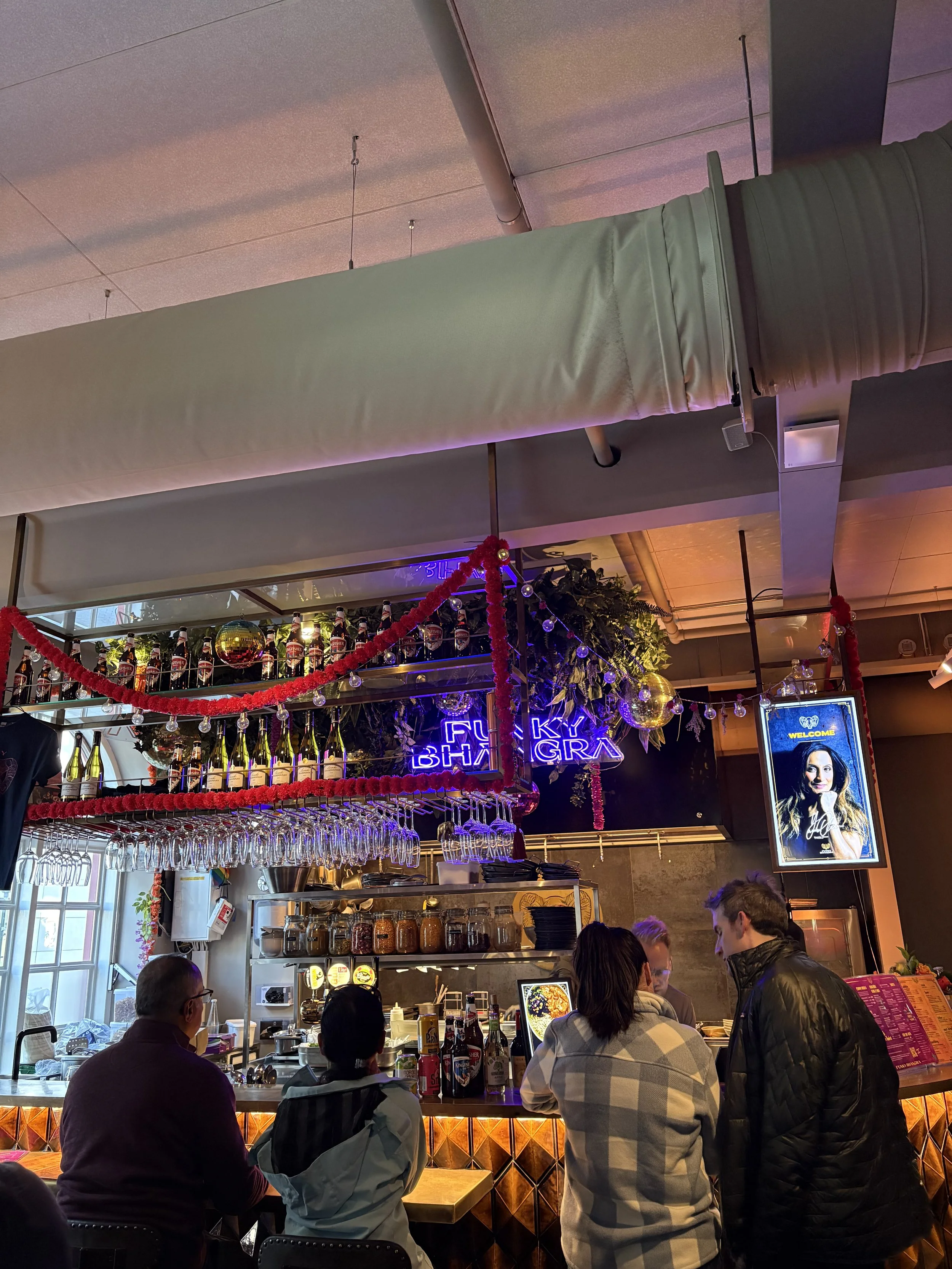
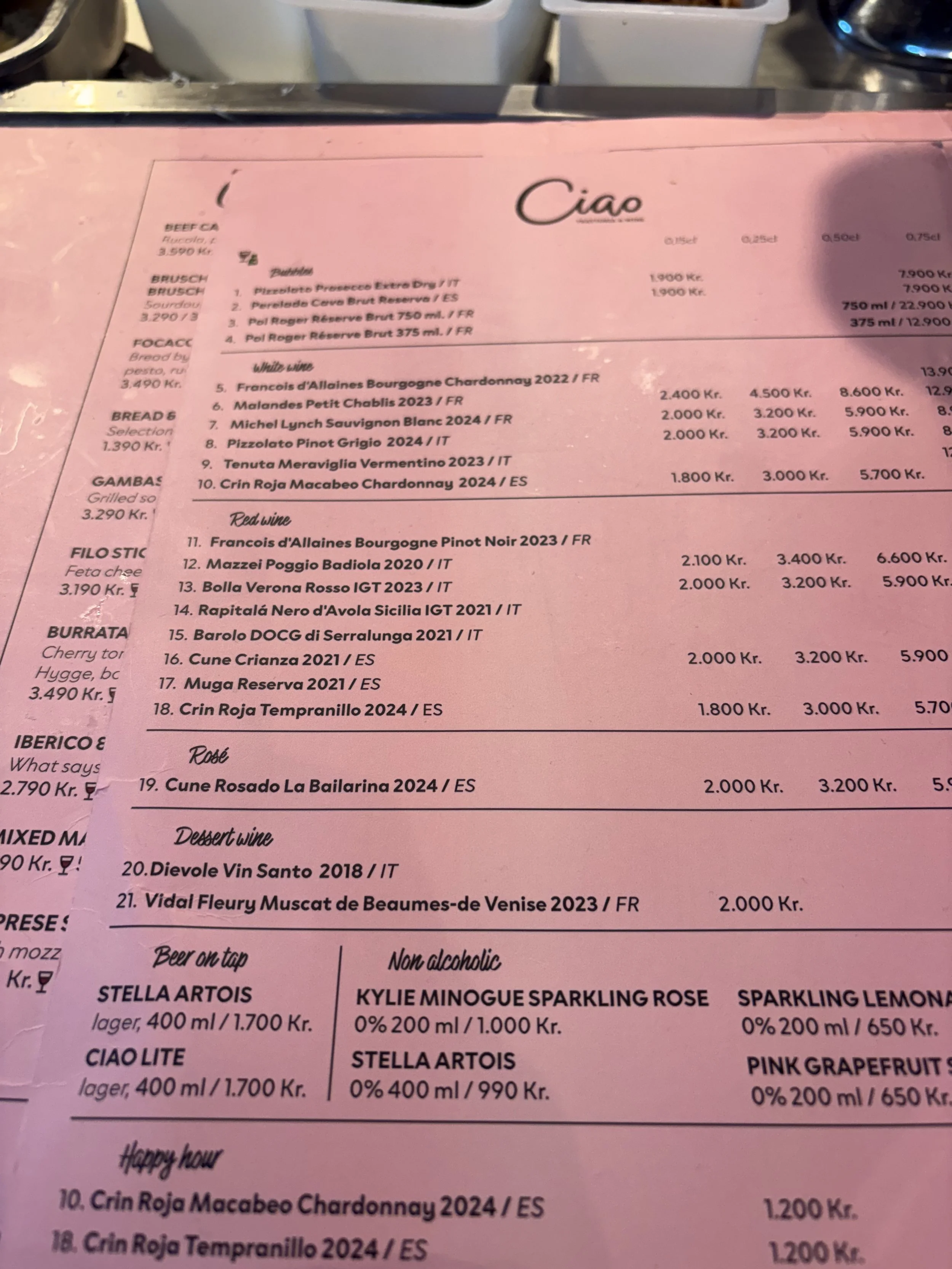
As each family member was looking for their cuisine of choice, I bellied up to Ciao, looked at the wine list, saw an Extra Dry Prosecco (hard pass as the “extra” funnily enough connotes more residual sugar not less despite the nomenclature; I’m not much of a Prosecco fan to begin with—although the rosé versions work for me) and a Cava. So, I did that. While waiting for my daughter’s order to be plated, I did a sideways glance at the list again, and my gaze stopped at the Bolla.
Bolla's Lasting Place in Italian Wine
Again, why? Why, because it struck me how much Bolla has impacted the Italian wine market in the United States (and probably the United Kingdom as well) over many decades. For good and ill, Bolla has at once kept many wine and grape growers in its part of the world, the Veneto, solvent while at the same time sending tankers of mediocre and personalty challenged reds and whites to us when we were just waking up to Italian wine—and wine in general—in the ‘70s and ‘80s.
For those old enough to remember feckless bottles of Soave and only marginally better versions of Valpolicella, these two, plus Chianti, were about all we knew of Italy’s unrivaled (in my opinion) range of wine styles employing native grape varieties. Bolla (it’s unfair to single Bolla out because there were others producing wines on an industrial scale back then—Asti Spumente, anyone?) did what many “emerging” regions/countries do (of course, to call Italy an emerging producer is ridiculous unless the reference dates to the Copper Age about 6,000 years ago), it sent low-end, inexpensive bottles in the hope of setting the hook, so to speak. I’ve always believed that it’s better to lead with your best, impress, then show your different price ranges. Anyway.
A Wine That Left Me Wanting More
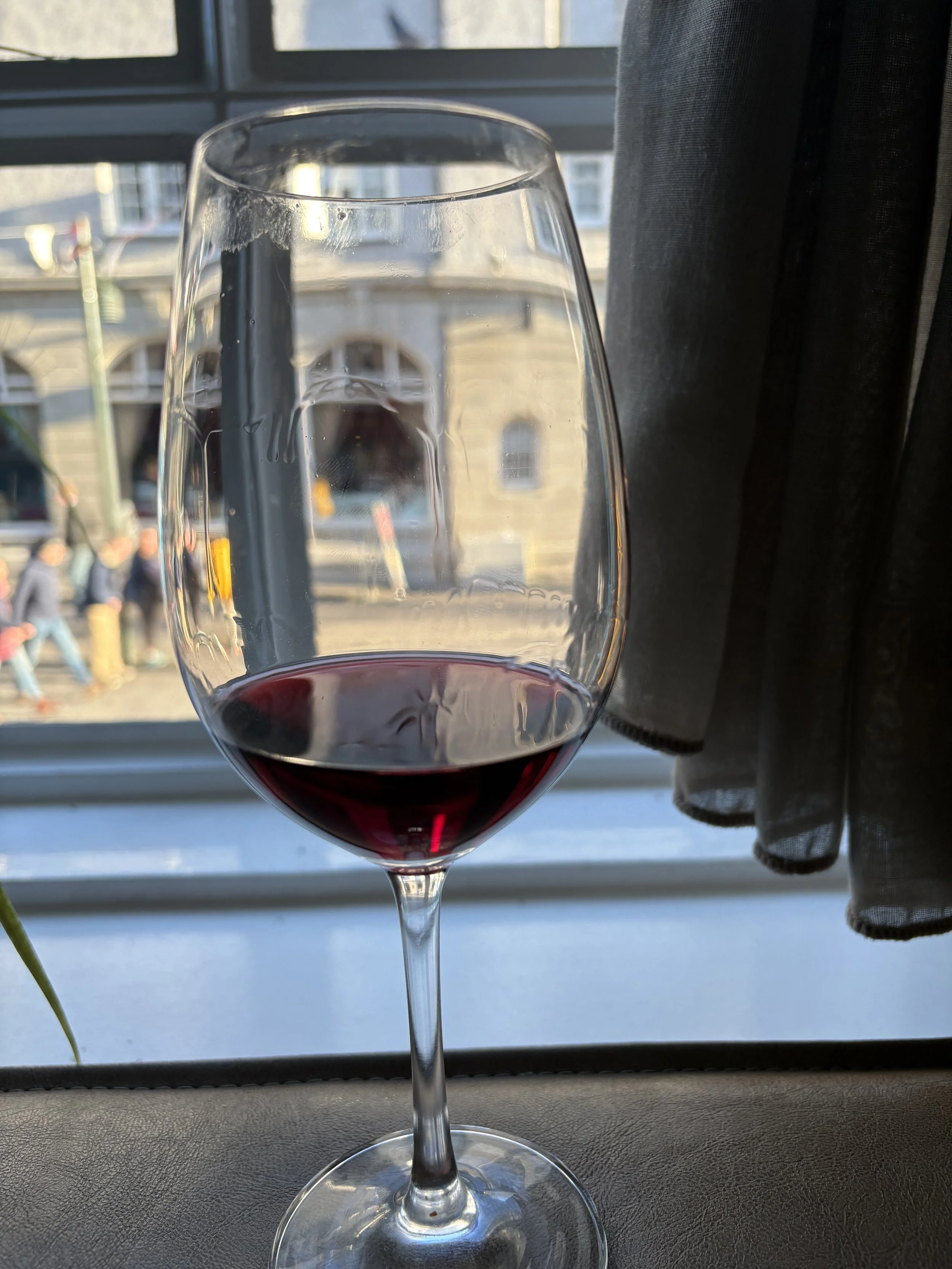
As for the wine, it was the 2023, which may or may not have been the current vintage. As indicated above, it’s an IGT which means that while it’s not from a specific appellation as, for example, a Valpolicella Classico is, it is supposed to reflect some base characteristics of the region. It was OK, but as one very familiar with the reds (and whites) of the Veneto, it honestly was about as indicative of the region as say, any modestly oaked red from just about anywhere would be. A few of the local grapes made it into the bottle along with some merlot and cab. So, it was unimposing and for about $16 a glass, I guess that’s something. There’s nothing inherently wrong with being a clean, solidly made wine that does no harm, but there’s nothing particularly interesting about that either (for a deeper dive into why place of origin really should matter, check out [why great wine tastes like somewhere link here] ).
An Impromptu Family Wine Tasting
All of this said, what was interesting was the impromptu tasting that took place when I returned with my glass to the table where my family was seated. My oldest two are recent college graduates (on time, no less!), and while they’re not adverse to wine, it isn’t their thing at this point. My lovely wife has a great palate but can take wine or leave it. My 13-year-old daughter will sometimes humor me by taking a quick sniff and taste, but thinks it’s “disgusting.”
My son took the glass, gave it a proper swirl, took a sip, worked it around his palate like a pro, swallowed (he’s certainly seen the tasting protocol enough times over the years!), thought for a few seconds and said, “Don’t tell me what you think; I’ll tell you, and we’ll compare.” At this point, my daughter and wife offered to engage in the same exercise. Once the three had gathered their notes, so to speak, I repeated the process myself once more in order to solidify my take.
What happened next was very cool and impressive. While tasting is very much a subjective game, there are a few aspects of the process that border on the objective. For instance, if your nose is picking up black fruit notes in your Chardonnay, there is something wrong with the wine or you are channeling some other experience. White wines smell like white fruit, citrus, stone fruit other than plums, etc. The same holds true for reds. If you’re getting green apple off your Cali Cab, you’re actually not.
My daughter and wife thought the primary aroma was of red plum. Nice. My son then offered pomegranate. Very nice. Me, I leaned toward red currant but jumped all over my son’s choice and totally got why the other two tasters thought red plum. I let them know that if nothing else, this was a clearly a red that skewed red fruity. Often a red will lean one way or the other—black versus red. Sometimes you’ll maybe get a touch of the raspy of raspberries or something equally red and tangy, along with some deeper black and blue fruit notes. Sometimes, you’ll just come away with brown bits, like earth, tobacco, cedar and the like. And if you’re lucky, you’ll maybe get a bit of all of the above.

The Best Part Was Sharing the Experience
My takeaway from all of this is that with wine, it’s always possible to make lemonade out of lemons. It was great fun taking a nondescript glass of wine and making it into a family experience. So, grazie, Bolla!